
What are you actually choosing?
High-pressure decorative laminate is a manufactured sheet surface available in many colours, patterns and textures. Veneer is a thin layer of wood used over a substrate; the species, cut, matching and coating affect its appearance. Wood-look laminate is not the same thing as wood veneer.
Request a complete panel sample where possible, including the proposed core, edge and finish. A loose surface sample does not show the finished cabinet construction.
Compare appearance and daily use
| Factor | Laminate | Wood veneer |
|---|---|---|
| Visual consistency | Check pattern repeat, texture and sheet layout | Expect wood variation; agree grain matching and acceptable range. |
| Edges | Confirm edge material, joints and corner detailing | Confirm veneer or solid-edge treatment and finish continuity. |
| Cleaning | Follow the specific laminate care guide | Follow the coating and veneer-system care guide. |
| Local damage | Ask whether repair or panel replacement is realistic | Ask whether the coating or veneer can be repaired without sanding through. |
| Room suitability | Verify horizontal/vertical and exposure suitability | Verify species, coating and exposure suitability. |
Choose by application
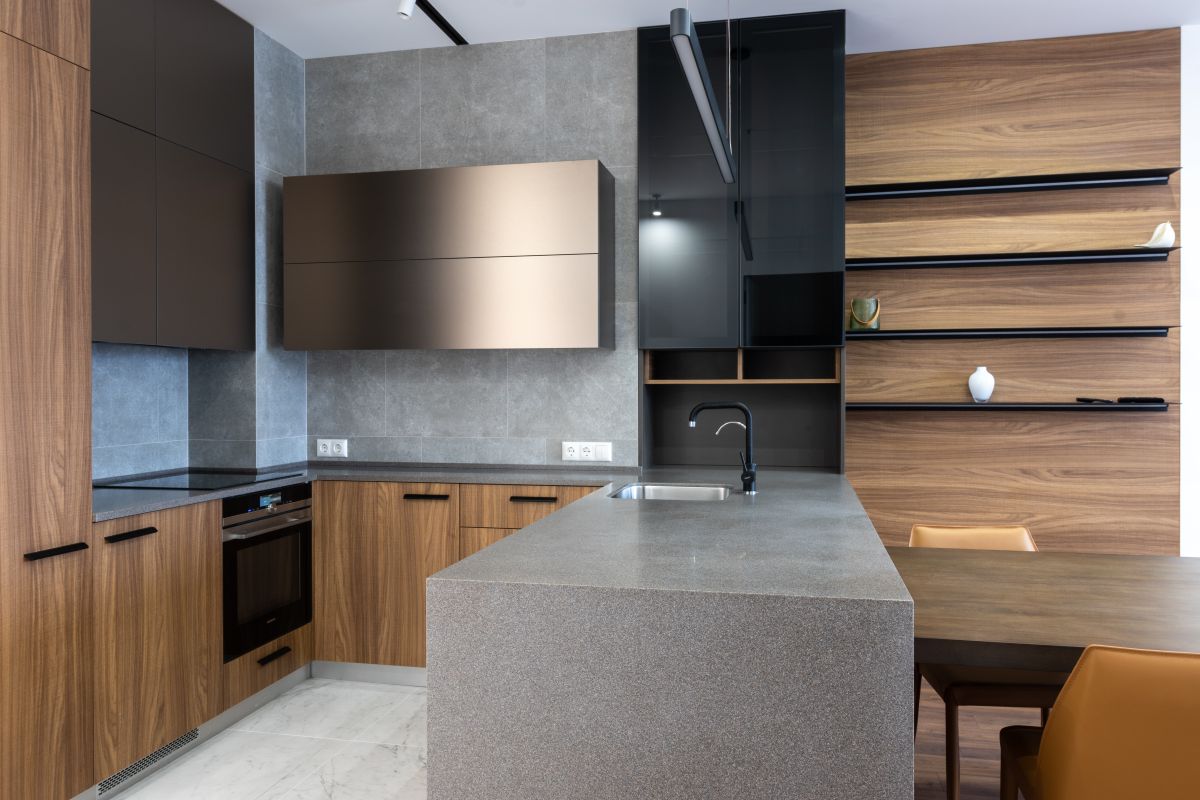
For a kitchen, review splash zones, steam, heat sources and cleaning habits, particularly near the sink and appliances. For wardrobes, assess handling, door edges and the desired grain or colour continuity. For feature carpentry, consider how panels meet, how lighting catches the texture and whether replacement matching could be difficult.
Do not transfer a product’s approval for a vertical dry panel to a horizontal wet or hot surface. Confirm the application with the supplier and fabricator.
Care is product- and coating-specific
Formica’s Singapore care guidance provides cleaning and protection instructions for its laminate products. Avoid treating a decorative finish as a cutting board or assuming it tolerates every cleaner.
Decospan’s finishing advice illustrates that veneer performance depends on the finishing system. Ask which coating will be applied and obtain its care instructions. Do not use a generic polish, solvent or abrasive treatment before checking suitability.
Be realistic about repair and refinishing
Discuss what happens if an edge chips, a door is scratched or a panel is damaged. A replacement may differ from neighbouring material or an earlier batch. For veneer, refinishing depends on the veneer thickness, existing coating and damage; repeated sanding is not automatically possible.
Keep the product codes, samples and coating specification. Ask the fabricator whether spare panels or sheets are practical for the chosen design rather than accepting a promise of invisible future repairs.
Specify the complete carpentry finish
- Core specification and panel thickness, separately from the finish.
- Laminate product code or veneer species, cut and matching method.
- Coating and sheen where applicable.
- Edge treatment, joints and grain direction on drawings.
- Hardware and service access for the intended use.
- Cleaning instructions, warranty terms and realistic repair options.
There is no defensible blanket cost premium or durability ranking without the actual specifications. Compare complete proposals and choose the finish that suits the room and your maintenance preferences.
Sources and scope
Guidance checked on 22 September 2026. Follow the linked authority guidance and the instructions for the products you select.