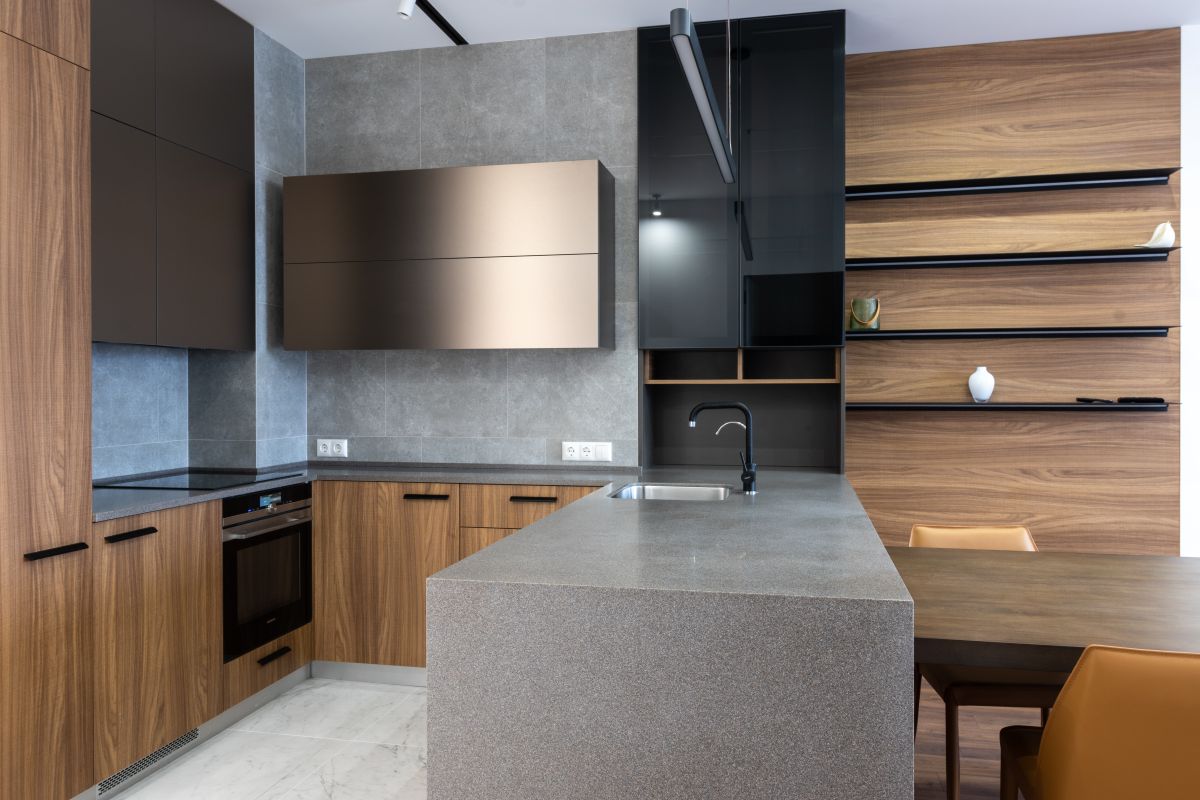
Separate the cabinet into its components
The core forms the panel. Laminate, veneer, paint or another surface provides the visible finish. Hinges, runners, fixings and how the cabinet is assembled also affect use. Calling a cabinet “laminate” does not tell you whether the board beneath it is plywood, MDF or particleboard.
Ask for a schedule distinguishing carcasses, doors, shelves, backs and sink-base panels. They need not all use the same construction, but any differences should be clear before fabrication.
Read the board specification
| Core | What the term describes | What still needs verification |
|---|---|---|
| Plywood | A panel made from bonded wood veneer layers | Species or product, bond and use class, thickness and declared performance. |
| MDF / fibreboard | A manufactured wood-fibre panel | Exact grade, permitted environment, edge treatment and fixing detail. |
| Particleboard | A manufactured wood-particle panel | Exact grade, surface, moisture classification and fastening system. |
| Other core systems | For example, a specified metal or compact-panel system | Actual construction, hardware compatibility, corrosion or moisture requirements and repair method. |
Compare actual documentation such as Hanson’s plywood specification, EGGER’s MDF datasheet and EGGER’s P3 particleboard product. These are examples of specification detail, not a claim that Essentia supplies these products.

Moisture resistance is not permission for persistent leaks
A moisture-resistant board grade does not make the entire cabinet waterproof. Edges, drilled holes, cut-outs, joints, finishes and the surrounding installation still matter. Ask how sink openings and exposed edges will be treated, and how a plumbing leak can be detected and accessed.
Do not judge a board grade by colour alone or accept “marine” as a complete specification. Ask for the exact product and supporting classification. Even an appropriate board should not be used to conceal an unresolved leak.
Understand emissions labels without overclaiming
Labels such as E1 or TSCA relate to defined test or regulatory frameworks; they are not interchangeable marketing scores. Request the test standard, issuing body, product identity and current certificate. Confirm that the evidence covers the board proposed in your quotation.
Singapore’s MSE guidance encourages certified products through schemes such as SGLS and SGBP. A board certificate alone does not prove the finished room’s air quality: adhesives, finishes and other installed materials also form part of the interior. Avoid “zero formaldehyde” or health guarantees without valid evidence.
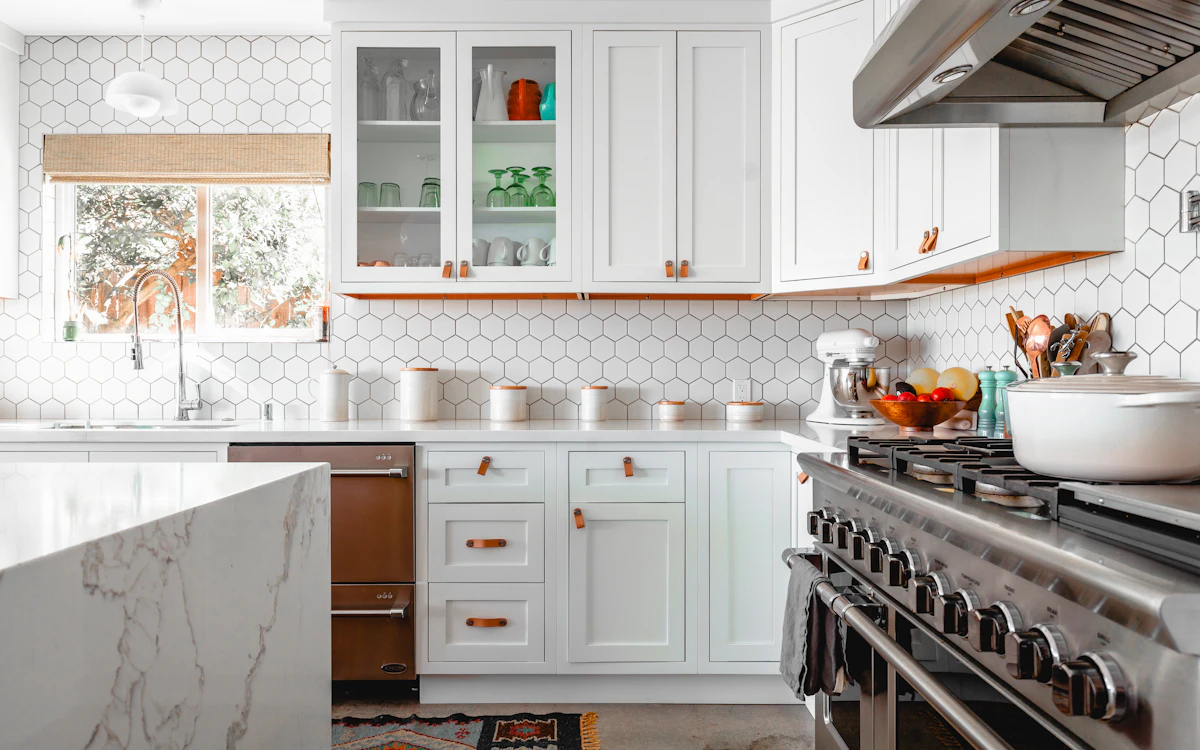
Hardware and detailing belong in the same decision
- Identify hinge and runner models, capacity and adjustment requirements.
- Check shelf span, support and intended storage use with the fabricator.
- Confirm back-panel and base construction rather than comparing doors only.
- Specify accessible service panels in the sink and appliance areas.
- Keep material and hardware codes for future replacement enquiries.
Use a like-for-like quotation schedule
Compare quantities and cabinet configuration before comparing core names. Two quotations may use the same board description but differ in thickness, backs, edge treatment, hardware or internal accessories. Ask for these to be itemised.
Choose the core for its intended location and verified specification. Select the visible surface separately using the laminate-versus-veneer guide, then coordinate the entire assembly with the kitchen plan.
Sources and scope
Guidance checked on 22 September 2026. Follow the linked authority guidance and the instructions for the products you select.