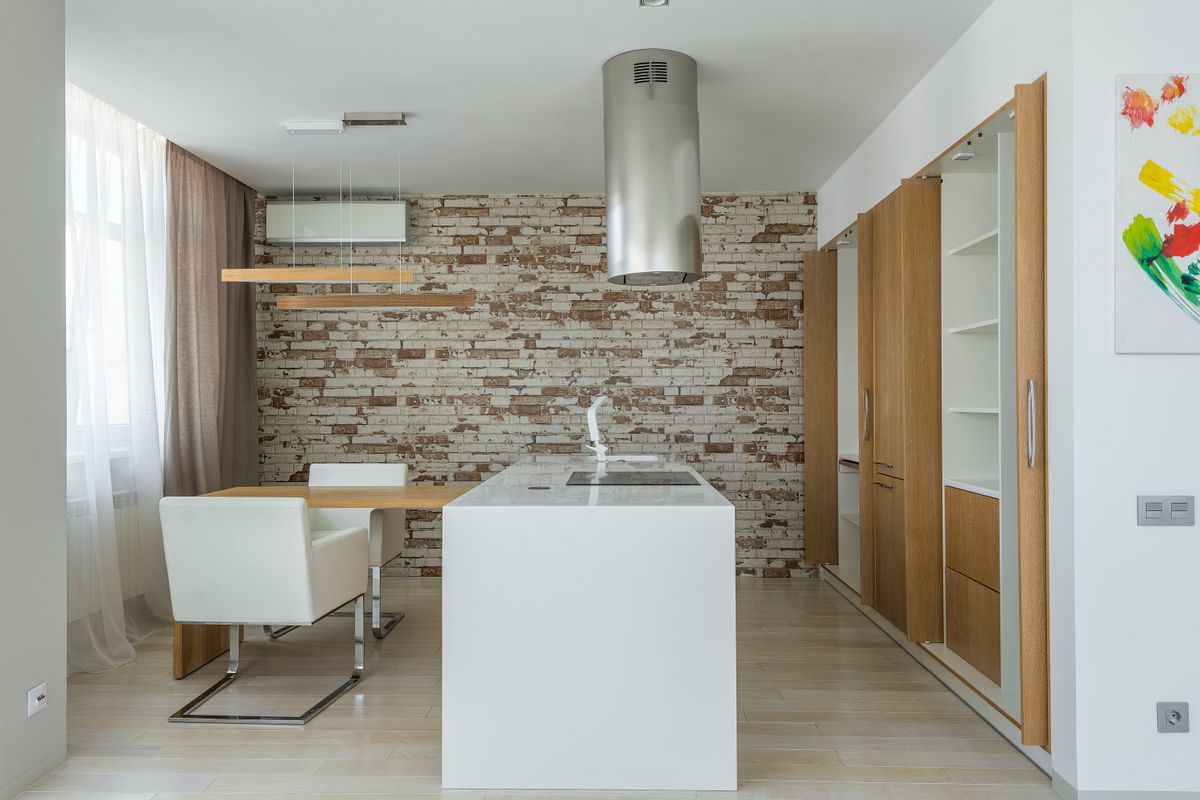
Understand the material names
Engineered quartz is a manufactured surface incorporating quartz with binders and other ingredients; formulations vary. See Caesarstone’s quartz information for that manufacturer’s product family. Products marketed as sintered stone or ultra-compact surfaces also vary in composition and process.
Cosentino describes Dekton as a mineral-based ultra-compact surface formed through sintering. Its claims apply to Dekton, not automatically to every product sold as “sintered stone.” Ask for the actual brand, range and technical sheet.
Compare the complete specification
| Factor | Quartz proposal | Sintered-stone proposal |
|---|---|---|
| Heat | Confirm care guidance and use of trivets | Check exact product and installation limits; do not generalise from another brand. |
| Stains and scratches | Check finish-specific care and exclusions | Check approved cleaning and surface treatment. |
| Edges and impact | Agree profile and vulnerable locations | Discuss chip risk, corner detail and repair options. |
| Fabrication | Confirm support, seams and appliance cut-outs | Confirm fabricator experience and manufacturer detailing. |
| Sunlight | Check UV suitability for the actual range | Verify product approval for the exposure. |
| Maintenance | Collect the exact care guide | Collect the exact care guide; resistance does not remove care obligations. |

Heat resistance needs a practical care rule
Caesarstone’s Singapore care guidance advises trivets or heat pads and warns against rapid temperature changes. Treat this as product-specific guidance rather than inventing a safe temperature for all quartz.
Even when a surface manufacturer allows hot objects, check the complete installation and nearby seals, cabinetry and appliances. Using protective accessories is a practical habit; do not promise that any countertop is heat-proof.
Edges, cut-outs and support deserve attention
Review the sink, hob, tap holes, overhangs, corners and seam locations with the fabricator before ordering. A small sample cannot show how a large installed top will be supported or how the pattern will meet at an edge.
Cosentino’s maintenance guidance discusses edge chipping and rounded edges as a preventive detail. That is a reason to consider edge design, not a guarantee that one profile will never chip. Ask what a repair would look like and whether a damaged area can realistically be repaired.
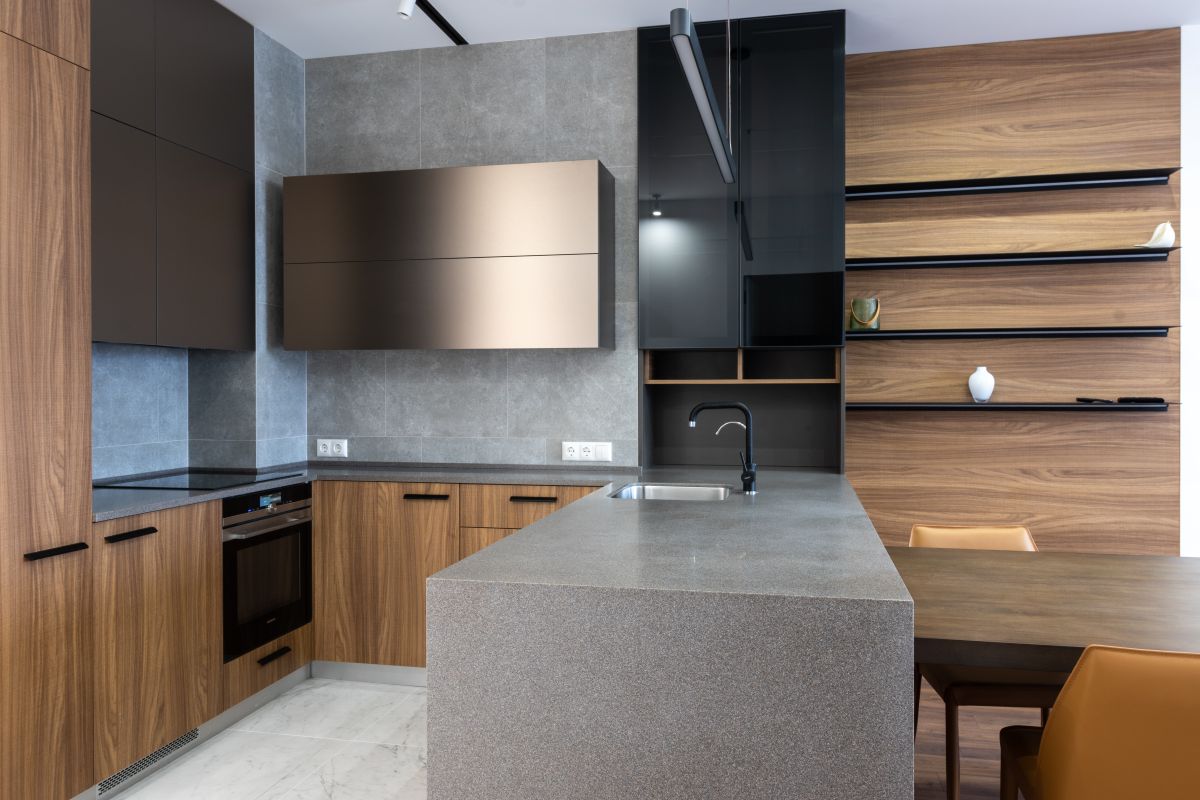
Choose a finish you can maintain
Ask for cleaning guidance for the exact texture and finish, including unsuitable cleaners. View more than a small swatch where pattern variation matters. Check visible seams, edge appearance and whether a replacement piece can match the original.
Solid surface can be considered as a separate contextual option where its fabrication and maintenance characteristics suit the design. It is a different material family; obtain its own technical and care information rather than assuming it behaves like quartz or sintered stone.
A countertop quotation checklist
- Brand, product code, finish and slab thickness.
- Measured layout, seam positions and edge profile.
- Sink and appliance models, cut-outs and support details.
- Templating, fabrication, delivery, installation and access constraints.
- Removal of an existing top and making good, where needed.
- Written care, warranty terms and exclusions for the supplied installation.
Review the countertop alongside the kitchen layout and cabinet structure. There is no universal winner independent of the product, detailing and daily use.
Sources and scope
Guidance checked on 22 September 2026. Follow the linked authority guidance and the instructions for the products you select.